
SpringBoot错误页面的原理,你知道吗?
文章目录
- 有如下接口: @RestController @RequestMapping("/demo") public class DemoController { @GetMapping("/index") public Object index() { System.out.println(1 / 0) ; return "/demo/index" ; } } 当访问上面接口后,默认情况下Springboot会返回如下错误信息: 当请求的Accept是text/html返回的是HTML结果,当Accpet是application/json返回如下: 后台接口会根据不同的Accept返回不同的数据格式。
- Springboot在启动过程中会执行如下处理: public abstract class AbstractApplicationContext { public void refresh() { onRefresh(); } } ServletWebServerApplicationContext public class ServletWebServerApplicationContext { protected void onRefresh() { super.onRefresh(); try { // 创建web服务 createWebServer(); } catch (Throwable ex) { throw new ApplicationContextException("Unable to start web server", ex); } } private void createWebServer() { // 这里假设我们使用的是Tomcat容器,那么这里的factory = TomcatServletWebServerFactory this.webServer = factory.getWebServer(getSelfInitializer()); } } TomcatServletWebServerFactory public class TomcatServletWebServerFactory { public WebServer getWebServer(ServletContextInitializer... initializers) { // 创建Tomcat实例 Tomcat tomcat = new Tomcat(); // ... // 准备上下文 prepareContext(tomcat.getHost(), initializers); return getTomcatWebServer(tomcat); } protected void prepareContext(Host host, ServletContextInitializer[] initializers) { // 该类继承自StandardContext类(该类所属tomcat,每一个StandardContext代表了一个webapp) TomcatEmbeddedContext context = new TomcatEmbeddedContext(); // ... // 配置上下文 configureContext(context, initializersToUse); } // 配置上下文 protected void configureContext(Context context, ServletContextInitializer[] initializers) { // 获取当前Spring容器中配置的ErrorPage,然后注册到Tomcat当前webapp的上下文中 // 这里其实对应的就是web.xml中配置的错误页 for (ErrorPage errorPage : getErrorPages()) { org.apache.tomcat.util.descriptor.web.ErrorPage tomcatErrorPage = new org.apache.tomcat.util.descriptor.web.ErrorPage(); tomcatErrorPage.setLocation(errorPage.getPath()); tomcatErrorPage.setErrorCode(errorPage.getStatusCode()); tomcatErrorPage.setExceptionType(errorPage.getExceptionName()); context.addErrorPage(tomcatErrorPage); } } } TomcatServletWebServerFactory类实现了ErrorPageRegistry接口,有如下方法: // TomcatServletWebServerFactory继承自AbstractConfigurableWebServerFactory // ConfigurableWebServerFactory接口继承了ErrorPageRegistry接口 public abstract class AbstractConfigurableWebServerFactory implements ConfigurableWebServerFactory { public void addErrorPages(ErrorPage... errorPages) { this.errorPages.addAll(Arrays.asList(errorPages)); } } 下面查看上面的addErrorPages方法是如何被调用的。 在自动配置类中导入了下面的类 @Import({ ServletWebServerFactoryAutoConfiguration.BeanPostProcessorsRegistrar.class}) public class ServletWebServerFactoryAutoConfiguration { } // BeanPostProcessorsRegistrar实现了ImportBeanDefinitionRegistrar,用来注册Bean public static class BeanPostProcessorsRegistrar implements ImportBeanDefinitionRegistrar, BeanFactoryAware { public void registerBeanDefinitions(AnnotationMetadata importingClassMetadata, BeanDefinitionRegistry registry) { // 注册了BeanPostProcessor类ErrorPageRegistrarBeanPostProcessor registerSyntheticBeanIfMissing(registry, "errorPageRegistrarBeanPostProcessor", ErrorPageRegistrarBeanPostProcessor.class); } } public class ErrorPageRegistrarBeanPostProcessor implements BeanPostProcessor, BeanFactoryAware { public Object postProcessBeforeInitialization(Object bean, String beanName) throws BeansException { // 判断当前的Bean是否实现了ErrorPageRegistry if (bean instanceof ErrorPageRegistry errorPageRegistry) { postProcessBeforeInitialization(errorPageRegistry); } return bean; } private void postProcessBeforeInitialization(ErrorPageRegistry registry) { // 遍历所有的ErrorPageRegistrar,注册到当前实现了ErrorPageRegistry接口的Bean中 // 如上面的TomcatServletWebServerFactory for (ErrorPageRegistrar registrar : getRegistrars()) { registrar.registerErrorPages(registry); } } private Collection<ErrorPageRegistrar> getRegistrars() { if (this.registrars == null) { // 获取容器中所有的ErrorPageRegistrar Bean对象 this.registrars = new ArrayList<>(this.beanFactory.getBeansOfType(ErrorPageRegistrar.class, false, false).values()); this.registrars.sort(AnnotationAwareOrderComparator.INSTANCE); this.registrars = Collections.unmodifiableList(this.registrars); } return this.registrars; } } 接下来就是从容器中获取ErrorPageRegistrar,然后注册到ErrorPageRegistry中。 在如下自动配置类中定义了一个默认的错误页对象。 public class ErrorMvcAutoConfiguration { @Bean public ErrorPageCustomizer errorPageCustomizer(DispatcherServletPath dispatcherServletPath) { return new ErrorPageCustomizer(this.serverProperties, dispatcherServletPath); } static class ErrorPageCustomizer implements ErrorPageRegistrar, Ordered { // springboot配置文件中的server接口中获取error配置信息 private final ServerProperties properties; private final DispatcherServletPath dispatcherServletPath; protected ErrorPageCustomizer(ServerProperties properties, DispatcherServletPath dispatcherServletPath) { this.properties = properties; this.dispatcherServletPath = dispatcherServletPath; } @Override public void registerErrorPages(ErrorPageRegistry errorPageRegistry) { // 获取server.error.path配置属性 ErrorPage errorPage = new ErrorPage(this.dispatcherServletPath.getRelativePath(this.properties.getError().getPath())); errorPageRegistry.addErrorPages(errorPage); } } } @ConfigurationProperties(prefix = "server", ignoreUnknownFields = true) public class ServerProperties { @NestedConfigurationProperty private final ErrorProperties error = new ErrorProperties(); } public class ErrorProperties { // 读取error.path配置,如果没有配置,则默认是/error @Value("${error.path:/error}") private String path = "/error"; } 通过上面的分析,默认情况下springboot容器启动后会像tomcat容器中注册一个/error的错误页,这个/error又是谁呢?
- 在默认的错误页自动配置中: public class ErrorMvcAutoConfiguration { @Bean @ConditionalOnMissingBean(value = ErrorAttributes.class, search = SearchStrategy.CURRENT) public DefaultErrorAttributes errorAttributes() { return new DefaultErrorAttributes(); } // 该Controller就是默认的/error错误跳转的类 @Bean @ConditionalOnMissingBean(value = ErrorController.class, search = SearchStrategy.CURRENT) public BasicErrorController basicErrorController(ErrorAttributes errorAttributes, ObjectProvider<ErrorViewResolver> errorViewResolvers) { return new BasicErrorController(errorAttributes, this.serverProperties.getError(),errorViewResolvers.orderedStream().toList()); } } @Controller @RequestMapping("${server.error.path:${error.path:/error}}") public class BasicErrorController extends AbstractErrorController { // 当请求的Accept=text/html时调用该方法 @RequestMapping(produces = MediaType.TEXT_HTML_VALUE) public ModelAndView errorHtml(HttpServletRequest request, HttpServletResponse response) { // ... } // 当请求的Accept=application/json时调用该方法 @RequestMapping public ResponseEntity<Map<String, Object>> error(HttpServletRequest request) { HttpStatus status = getStatus(request); if (status == HttpStatus.NO_CONTENT) { return new ResponseEntity<>(status); } Map<String, Object> body = getErrorAttributes(request, getErrorAttributeOptions(request, MediaType.ALL)); return new ResponseEntity<>(body, status); } } 以上就是当springboot默认情况下发生错误时的执行输出原理。
环境:Springboot3.0.5
有如下接口:
@RestController
@RequestMapping("/demo")
public class DemoController {


 @GetMapping("/index")
 public Object index() {
 System.out.println(1 / 0) ;
 return "/demo/index" ;
 }

}
当访问上面接口后,默认情况下Springboot会返回如下错误信息:
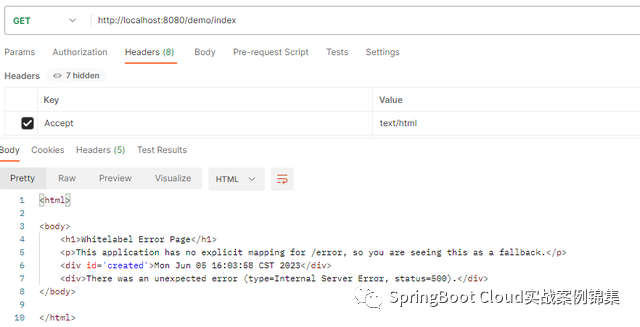
当请求的Accept是text/html返回的是HTML结果,当Accpet是application/json返回如下:
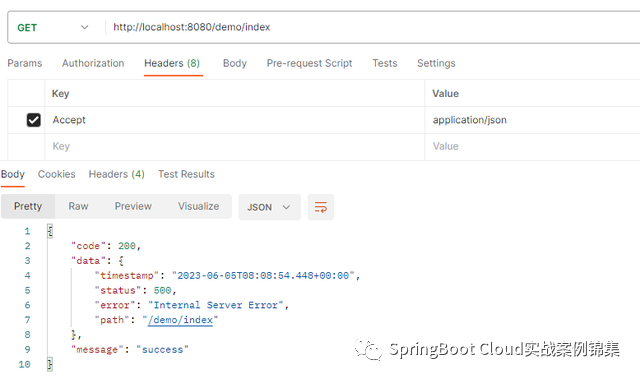
后台接口会根据不同的Accept返回不同的数据格式。
Springboot在启动过程中会执行如下处理:
public abstract class AbstractApplicationContext {
 public void refresh() {
 onRefresh();
 }
}
ServletWebServerApplicationContext
public class ServletWebServerApplicationContext {
 protected void onRefresh() {
 super.onRefresh();
 try {
 // 创建web服务
 createWebServer();
 } catch (Throwable ex) {
 throw new ApplicationContextException("Unable to start web server", ex);
 }
 }
 private void createWebServer() {
 // 这里假设我们使用的是Tomcat容器,那么这里的factory = TomcatServletWebServerFactory
 this.webServer = factory.getWebServer(getSelfInitializer());
 }
}
TomcatServletWebServerFactory
public class TomcatServletWebServerFactory {
 public WebServer getWebServer(ServletContextInitializer... initializers) {
 // 创建Tomcat实例
 Tomcat tomcat = new Tomcat();
 // ...
 // 准备上下文
 prepareContext(tomcat.getHost(), initializers);
 return getTomcatWebServer(tomcat);
 }
 protected void prepareContext(Host host, ServletContextInitializer[] initializers) {
 // 该类继承自StandardContext类(该类所属tomcat,每一个StandardContext代表了一个webapp)
 TomcatEmbeddedContext context = new TomcatEmbeddedContext();
 // ...
 // 配置上下文
 configureContext(context, initializersToUse);
 }
 // 配置上下文
 protected void configureContext(Context context, ServletContextInitializer[] initializers) {
 // 获取当前Spring容器中配置的ErrorPage,然后注册到Tomcat当前webapp的上下文中
 // 这里其实对应的就是web.xml中配置的错误页
 for (ErrorPage errorPage : getErrorPages()) {
 org.apache.tomcat.util.descriptor.web.ErrorPage tomcatErrorPage = new org.apache.tomcat.util.descriptor.web.ErrorPage();
 tomcatErrorPage.setLocation(errorPage.getPath());
 tomcatErrorPage.setErrorCode(errorPage.getStatusCode());
 tomcatErrorPage.setExceptionType(errorPage.getExceptionName());
 context.addErrorPage(tomcatErrorPage);
 }
 }
}TomcatServletWebServerFactory类实现了ErrorPageRegistry接口,有如下方法:
// TomcatServletWebServerFactory继承自AbstractConfigurableWebServerFactory
// ConfigurableWebServerFactory接口继承了ErrorPageRegistry接口
public abstract class AbstractConfigurableWebServerFactory implements ConfigurableWebServerFactory {
 public void addErrorPages(ErrorPage... errorPages) {
 this.errorPages.addAll(Arrays.asList(errorPages));
 }
}
下面查看上面的addErrorPages方法是如何被调用的。
在自动配置类中导入了下面的类
@Import({ ServletWebServerFactoryAutoConfiguration.BeanPostProcessorsRegistrar.class})
public class ServletWebServerFactoryAutoConfiguration {
}
// BeanPostProcessorsRegistrar实现了ImportBeanDefinitionRegistrar,用来注册Bean
public static class BeanPostProcessorsRegistrar implements ImportBeanDefinitionRegistrar, BeanFactoryAware {
 public void registerBeanDefinitions(AnnotationMetadata importingClassMetadata, BeanDefinitionRegistry registry) {
 // 注册了BeanPostProcessor类ErrorPageRegistrarBeanPostProcessor
 registerSyntheticBeanIfMissing(registry, "errorPageRegistrarBeanPostProcessor", ErrorPageRegistrarBeanPostProcessor.class);
 }
}
public class ErrorPageRegistrarBeanPostProcessor implements BeanPostProcessor, BeanFactoryAware {
 public Object postProcessBeforeInitialization(Object bean, String beanName) throws BeansException {
 // 判断当前的Bean是否实现了ErrorPageRegistry
 if (bean instanceof ErrorPageRegistry errorPageRegistry) {
 postProcessBeforeInitialization(errorPageRegistry);
 }
 return bean;
 }
 private void postProcessBeforeInitialization(ErrorPageRegistry registry) {
 // 遍历所有的ErrorPageRegistrar,注册到当前实现了ErrorPageRegistry接口的Bean中
 // 如上面的TomcatServletWebServerFactory
 for (ErrorPageRegistrar registrar : getRegistrars()) {
 registrar.registerErrorPages(registry);
 }
 }
 private Collection<ErrorPageRegistrar> getRegistrars() {
 if (this.registrars == null) {
 // 获取容器中所有的ErrorPageRegistrar Bean对象
 this.registrars = new ArrayList<>(this.beanFactory.getBeansOfType(ErrorPageRegistrar.class, false, false).values());
 this.registrars.sort(AnnotationAwareOrderComparator.INSTANCE);
 this.registrars = Collections.unmodifiableList(this.registrars);
 }
 return this.registrars;
 }
}
接下来就是从容器中获取ErrorPageRegistrar,然后注册到ErrorPageRegistry中。
在如下自动配置类中定义了一个默认的错误页对象。
public class ErrorMvcAutoConfiguration {
 @Bean
 public ErrorPageCustomizer errorPageCustomizer(DispatcherServletPath dispatcherServletPath) {
 return new ErrorPageCustomizer(this.serverProperties, dispatcherServletPath);
 }
 static class ErrorPageCustomizer implements ErrorPageRegistrar, Ordered {
 // springboot配置文件中的server接口中获取error配置信息
 private final ServerProperties properties;


 private final DispatcherServletPath dispatcherServletPath;


 protected ErrorPageCustomizer(ServerProperties properties, DispatcherServletPath dispatcherServletPath) {
 this.properties = properties;
 this.dispatcherServletPath = dispatcherServletPath;
 }


 @Override
 public void registerErrorPages(ErrorPageRegistry errorPageRegistry) {
 // 获取server.error.path配置属性
 ErrorPage errorPage = new ErrorPage(this.dispatcherServletPath.getRelativePath(this.properties.getError().getPath()));
 errorPageRegistry.addErrorPages(errorPage);
 }
 }
}
@ConfigurationProperties(prefix = "server", ignoreUnknownFields = true)
public class ServerProperties {
 @NestedConfigurationProperty
 private final ErrorProperties error = new ErrorProperties();
}
public class ErrorProperties {
 // 读取error.path配置,如果没有配置,则默认是/error
 @Value("${error.path:/error}")
 private String path = "/error";
}
通过上面的分析,默认情况下springboot容器启动后会像tomcat容器中注册一个/error的错误页,这个/error又是谁呢?
在默认的错误页自动配置中:
public class ErrorMvcAutoConfiguration {
 @Bean
 @ConditionalOnMissingBean(value = ErrorAttributes.class, search = SearchStrategy.CURRENT)
 public DefaultErrorAttributes errorAttributes() {
 return new DefaultErrorAttributes();
 }


 // 该Controller就是默认的/error错误跳转的类
 @Bean
 @ConditionalOnMissingBean(value = ErrorController.class, search = SearchStrategy.CURRENT)
 public BasicErrorController basicErrorController(ErrorAttributes errorAttributes, ObjectProvider<ErrorViewResolver> errorViewResolvers) {
 return new BasicErrorController(errorAttributes, this.serverProperties.getError(),errorViewResolvers.orderedStream().toList());
 }
}
@Controller
@RequestMapping("${server.error.path:${error.path:/error}}")
public class BasicErrorController extends AbstractErrorController {
 // 当请求的Accept=text/html时调用该方法
 @RequestMapping(produces = MediaType.TEXT_HTML_VALUE)
 public ModelAndView errorHtml(HttpServletRequest request, HttpServletResponse response) {
 // ...
 }
 // 当请求的Accept=application/json时调用该方法
 @RequestMapping
 public ResponseEntity<Map<String, Object>> error(HttpServletRequest request) {
 HttpStatus status = getStatus(request);
 if (status == HttpStatus.NO_CONTENT) {
 return new ResponseEntity<>(status);
 }
 Map<String, Object> body = getErrorAttributes(request, getErrorAttributeOptions(request, MediaType.ALL));
 return new ResponseEntity<>(body, status);
 }
}
以上就是当springboot默认情况下发生错误时的执行输出原理。
© 版权声明
文章版权归作者所有,未经允许请勿转载。